The Joint Institute for Nuclear Research is an international intergovernmental organization, a world-famous scientific centre integrating fundamental theoretical and experimental research with the development and application of advanced technology and university education.
The Institute has a wide range of large and very large research infrastructure, which overall represents one of the world’s largest multidisciplinary research infrastructures, managed through a deeply integrated model of international scientific and technical cooperation.
The expert analysis shows that almost half of modern projects in basic sciences have accompanying applied research programmes aimed at meeting the sustainable development goals (SDG).
JINR fields of science occupy a priority position in the world scientific agenda and development of large research infrastructure. Worldwide international dimension, the multidisciplinary scientific programme, and large infrastructure projects of JINR harmoniously complement the global scientific agenda and the worldwide landscape of large research infrastructure, assuming, along with the main goals of fundamental studird, the achievement of certain SDG.
Research directions at JINR:
- Theoretical Physics
- Relativistic Heavy Ion Physics
- Spin Physics
- Particle Physics
- Low Energy Nuclear Physics
- Neutron Nuclear Physics
- Condensed Matter Physics
- Neutrino & Astroparticle Physics
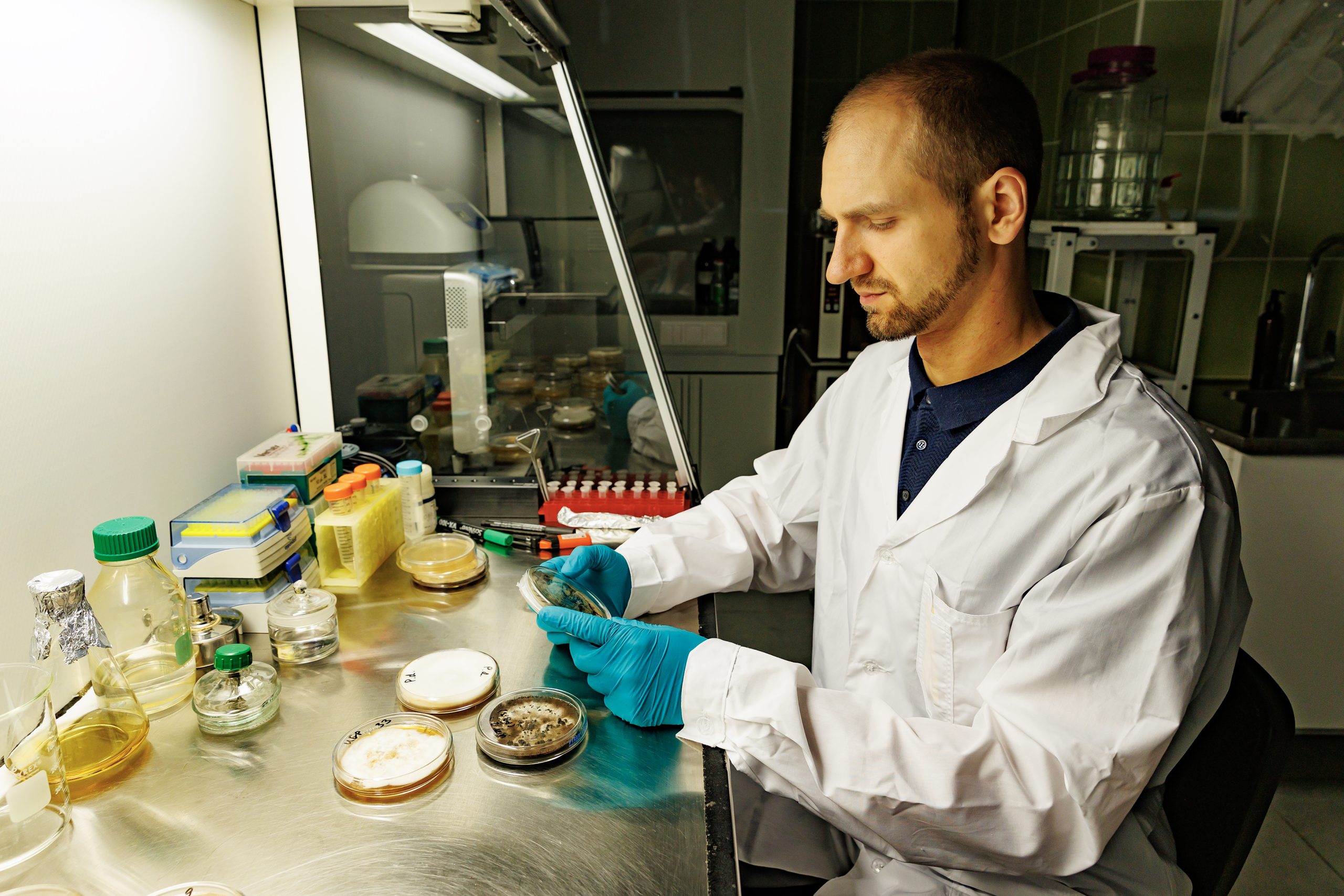
- Life Sciences: Radiobiology, Biomedicine, Structural Biology, Astrobiology, Ecology
- IT & High-Performance Computing
JINR has 7 laboratories, each comparable in the research scale to a large academic institution:
- Veksler and Baldin Laboratory of High Energy Physics (VBLHEP)
- Dzhelepov Laboratory of Nuclear Problems (DLNP)
- Bogoliubov Laboratory of Theoretical Physics (BLTP)
- Frank Laboratory of Neutron Physics (FLNP)
- Flerov Laboratory of Nuclear Reactions (FLNR)
- Meshcheryakov Laboratory of Information Technologies (MLIT)
- Laboratory of Radiation Biology (LRB)
The JINR Scientific Council develops the scientific policy and forms strategic, medium-term, and annual research plans, relying on specialised expert Programme Advisory Committees and Science and Technology Councils of the JINR laboratories.
The results of JINR’s research and overall activities undergo a multi-level expert review, from the Science and Technology Councils of the laboratories to the Institute’s Scientific Council, and are approved by the Committee of Plenipotentiaries of the Governments of the JINR Member States.
Relativistic heavy ion physics & spin physics
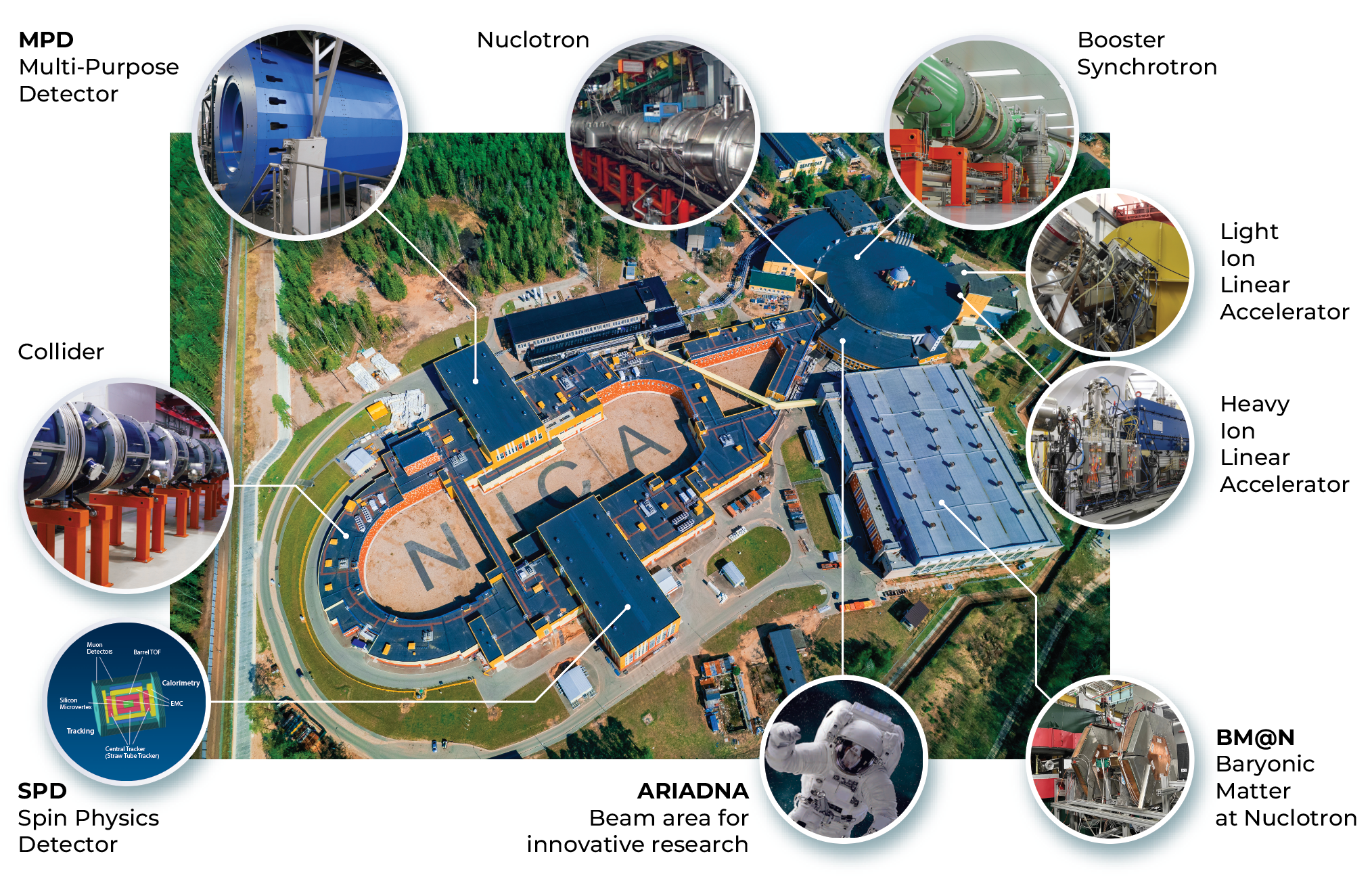
The Institute is implementing a megascience project — the NICA (Nuclotron-based Ion Collider fAcility) Superconducting Heavy Ion Collider with the BM@N, MPD, SPD Detectors as well as the ARIADNA Complex of stations for applied research.
Search for new states of nuclear matter
The physics programme of the (Baryonic Matter @ Nuclotron) and MPD (Multi-Purpose Detector) experiments is aimed at studying critical states of nuclear matter under extreme conditions of extremely high baryonic matter density and high energy density using high-intensity relativistic heavy ion beams. The SPD (Spin Physics Detector) Experiment will investigate in detail the structure of nucleons using polarised proton and deuteron beams.
NICA covers the energy range where the most significant and interesting physics phenomena occurs: the dominance of the hadronic effect changes to the partonic one, a first-order phase transition on the QCD phase diagram is possible, and there is a transition from baryon dominance to meson dominance in particle formation.
NICA parameters
Collider ring circumference: 503 m
Energy: √S = 4 – 11 GeV/nucleon
Range of nuclei: from hydrogen to bismuth, including gold
Extracted beams:
- energy: up to 4,5 GeV/nucleon
- intensity:
5•108 s-1 for heavy ions
1010 s-1 for protons
Design luminosity:
- 1027 cm-2 s-1 for heavy ions
- 1032 cm-2 s-1 for light nuclei and polarised protons as well as deuterons
Channels for transporting charged particle beams and irradiation stations are being developed and put into operation at NICA. They are designed for research in life sciences, radiation materials science, radiation resistance of electronics, and the development of advanced technologies for nuclear energy tasks. ARIADNA (Applied Research Infrastructure for Advanced Developments at NICA fAcility) was launched in 2023.
JINR in international particle physics experiments
The Institute is actively involved in major international collaborations. As part of experiments at the LHC at CERN, JINR physicists participate in analysing the data obtained and upgrading the detectors:
- search for physics beyond the Standard Model: CMS, ATLAS, COMET;
- spin and orbital momentum composition of the proton: COMPASS/AMBER;
- spectroscopy of charmed particles production in electron-positron annihilations: BES–III;
- also @ CERN: ALICE, NA61, NA62, NA64 etc.
RHIC@BNL — beam energy scan made by the STAR Collaboration is one of the key components of the NICA physics programme. FAIR/GSI–NICA collaboration is mutually beneficial for the participants:
- silicon tracker technology in CBM will be implemented in the BM@N and SPD Experiments;
- high speed electronics with the PASTTRECK Chip from HADES will be used for SPD straw-tracker;
- CBM superconducting dipole magnet, R&D for track gas detectors, and scintillation detectors with SiPM readout are very helpful in preparation of the NICA experiments.
Low energy nuclear physics
In this field, JINR conducts advanced experiments on the synthesis of new superheavy elements.
The scientific programme includes experi- ments on the study of nuclear and chemical properties of new superheavy elements, reactions of fission, fusion, and multinuc- leon transfer in heavy ion collisions.
 Five new superheavy
elements
have been
discovered at JINR
that conclude
period 7
of the Periodic Table
Five new superheavy
elements
have been
discovered at JINR
that conclude
period 7
of the Periodic Table
One of the results of global importance achieved by JINR scientists is the experimental proof of the existence of the “island of stability” of superheavy elements centred near Z=114 and N=184.
In November 2021, FLNR JINR Scientific Leader Yuri Oganessian, after whom new, 118th, element was named for his pioneering contributions to transactinide elements research, was awarded the UNESCO–Russia Mendeleev International Prize in the Basic Sciences “to acknowledge his breakthrough discoveries extending the Periodic Table and for his promotion of the basic sciences for development at the global scale”.
 Yuri Oganessian and Anna-Maria Cetto at the UNESCO–Russia Mendeleev Prize ceremony in Paris, 15 November 2021
At present
The development of works on the synthesis and study of the properties of superheavy elements is associated with the creation of a new accelerator complex called the Superheavy Element Factory (SHE Factory) based on the DC–280 Cyclotron. The key task of the complex is to enable scientists to synthesise new chemical elements with atomic numbers 119, 120, and beyond, as well as to study in detail the nuclear and chemical properties of the earlier synthesised superheavy elements.
Record parameters of accelerated heavy ion beams have been achieved at the accelerator complex of the Superheavy Element Factory. The 48Ca beam intensity exceeds 8 pμA. The 40Ar beam at the SHE Factory has reached its design intensity of 10 pμA.
The scientific infrastructure of the SHE Factory is gradually improving. In addition, the U–400 and U–400M Accelerators are developing, a new facility for applied research in track membranes and materials science, DC–140, is under construction.
 Main facility — DRIBs–III Accelerator Complex
Superheavy Element Factory
Strategic research directions:
- heavy and superheavy nuclei;
- light exotic nuclei;
- radiation effects and nanotechnologies;
- accelerator technologies.
Summary of experiments (2020–2026):
- ~250 new events of synthesis of superheavy nuclides (~100 events at all the facilities in the world, including in Dubna, since 1999);
- -50 isotopes’ decays were studied;
- 9 new isotopes were discovered: 288Lv, 289Lv, 286Mc, 280Cn, 276Ds, 275Ds, 272Hs, 268Sg, 264Lr.
Neutrino physics and astrophysics
 Baikal-GVD Telescope optical module
JINR neutrino physics and astrophysics research programme includes a number of projects, among which Baikal–GVD is the main infrastructure and research facility.
The Baikal–GVD Neutrino Detector is located in Lake Baikal 3.6 km away from the shore, at a depth of about 1300 m. Baikal–GVD is the largest in the Northern Hemisphere and the second in size in the world. Baikal–GVD is one of the three neutrino telescopes across the world and, along with IceCube at the South Pole and KM3NeT (former ANTARES) in the Mediterranean Sea, is part of the Global Neutrino Network (GNN).
The task of the project: identification of astrophysical sources of ultra- high energy neutrinos (exceeding tens of TeV).
Topicality: their sources are still unknown. The identification of sources will help elucidate the mechanisms of galaxies’ creation and evolution. This unique scientific facility is an important tool of multi-messenger astronomy, a new powerful method to investigate the Universe.
The Baikal–GVD Neutrino Telescope is being constructed by the international collaboration with a leading role of the Institute for Nuclear Research of the Russian Academy of Sciences and the Joint Institute for Nuclear Research.
JINR participation in neutrino oscillation experiments
- Determination of CP-violating phase: DUNE
- Determination of neutrino mass ordering: NOvA, JUNO
- Precise determination of elements of the lepton mixing matrix: JUNO, DUNE
Physical properties of neutrino
- Determination whether a neutrino is a Majorana particle: SuperNEMO, GERDA–LEGEND
- Coherent elastic neutrino-nucleus scattering process at nuclear reactors: νGEN (GEMMA)
- Sterile neutrino oscillation: DANSS
Dark matter discovery
Condensed matter and nuclear neutron physics
This scientific programme is implemented primarily, but not exclusively, at two main facilities: the IBR–2 Pulsed Periodic Reactor and the IREN Resonance Neutron Source based on a linear electron accelerator.
The IBR–2 Reactor is among top 5 “brightest” neutron sources in the world, and an international user programme is being implemented using its facilities to fulfil a wide range of tasks in physics, chemistry, biology, geology, materials science, ecology, etc. A set of 16 high-performance instruments is available, at which hundreds of experiments are carried out annually by scientists from all around the world.
Research at IREN focuses on nuclear data, issues related to fundamental symmetries of nuclear interactions, elementary analysis using neutron resonance method, and applied research for the study of cultural heritage objects.
JINR is considering the possibility of creating a new high intensity pulsed neutron source. In combination with a modern complex of moderators, neutron extraction systems, sample environment systems, and spectrometers, such a source has every chance to become the best one in the world and open unprecedented possibilities for scientists from the JINR Member States and the entire neutron community.
 Schematic representation
of the IBR–2 Reactor’s operation
Schematic representation
of the IBR–2 Reactor’s operation
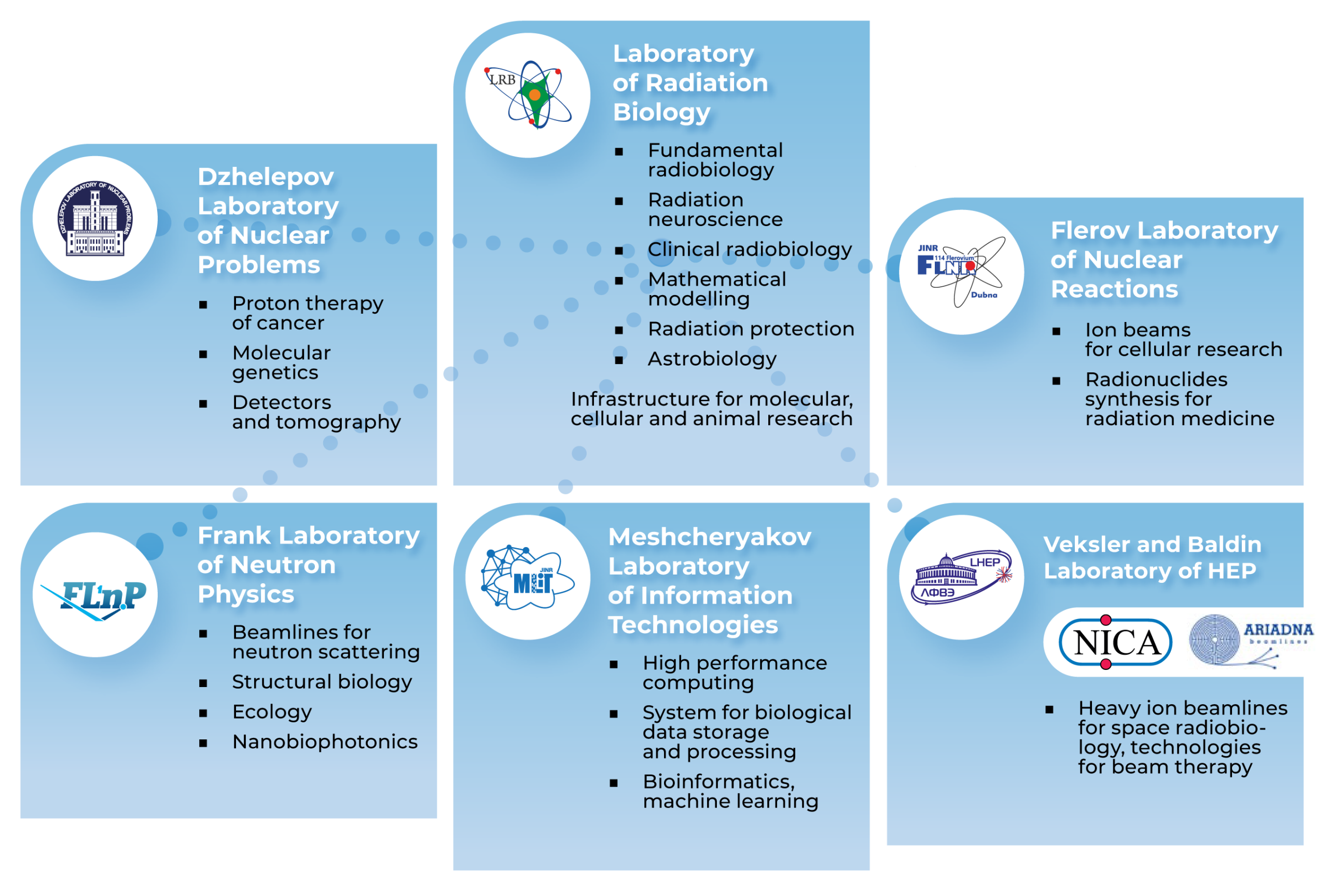
Life sciences
Scientific research in general and life sciences in particular have always benefited from the development of large-scale scientific infrastructures. Coordination of interlaboratory studies is entrusted to the Laboratory of Radiation Biology, and expert support is provided by the JINR Interlaboratory Council on Biophysical Research.
JINR advantages as a platform for international interdisciplinary collaboration in life sciences:
- Multiple radiation sources with applied channels (protons, neutrons, heavy ions, radionuclides).
- Variety of complementary instruments for structural biology studies.
- Infrastructure for large-scale animal research, including primates.
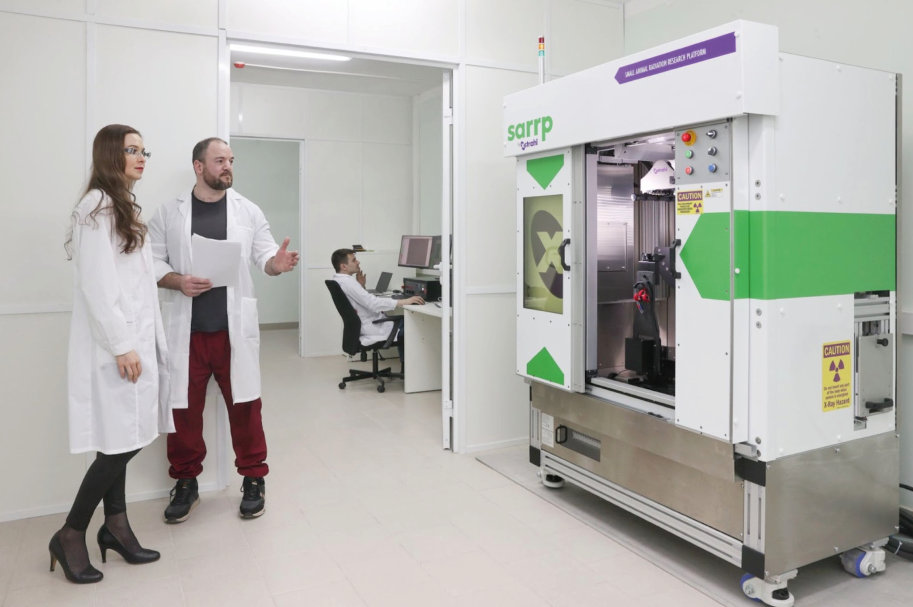
The vast experience and expertise accumulated over decades of work, coupled with the constant development of infrastructure, allow conducting a variety of studies:
- A fundamentally new method to enhance the biological effectiveness of medical proton beams and gamma-ray units has been developed and patented by LRB JINR.
- Worldwide unique experiments were carried out to study the effect of high-energy heavy charged particles on the brain and behaviour of primates.
- Computational studies of molecular and genetic mechanisms of severe brain diseases, including Alzheimer’s disease and epilepsy, are in progress at LRB, FLNP, and MLIT.
- DLNP JINR conducts genetic research, in particular the determination of the longevity gene and the determination of the propensity to various allergic reactions.
- Research at the IBR–2 neutron beamlines deepens understanding of mechanisms of health protection and recovery.
- The method of neutron activation analysis is used at FLNP for assessing the state of environmental objects, the safety of food, and developing remediation methods.
- The TANGRA Collaboration at the Laboratory of Neutron Physics at JINR is developing a mobile facility based on the tagged neutron method for determining carbon content in soil.
- JINR in cooperation with the Space Research Institute of the Russian Academy of Sciences participates in the development and creation of neutron, gamma-ray, and charged particle detectors for spacecrafts. Thus, the HEND and LEND High Energy Neutron Detectors work on board NASA orbiters; the DAN Device on board the Curiosity Rover is part of the Mars Science Laboratory.
- LRB specialists at JINR developed and patented a novel method that allows modelling mixed radiation fields, which are generated by the Galactic cosmic rays inside a spacecraft in deep space, in accelerators.
- In 2024, the Astrobiology monograph was published at JINR. The book describes the evolution of perspectives on life’s origin, explores the facts and models these views are based on, presents the stages of the formation of astrobiology as a science, and outlines a range of unresolved issues and promising areas of astrobiology.
- For the first time the synthesis of prebiotic compounds was observed after irradiation of formamide and meteorite matter with high energy hadron beams.
- LRB and MLIT, together with the University of Belgrade, conduct research on the development and implementation of algorithms for automating radiobiological research.
- JINR has further plans to develop vibrational spectroscopy & microscopy: Raman and FTIR, as well as micro-spectroscopic study of programmed cell death — NETosis and Apoptosis.
Theoretical physics
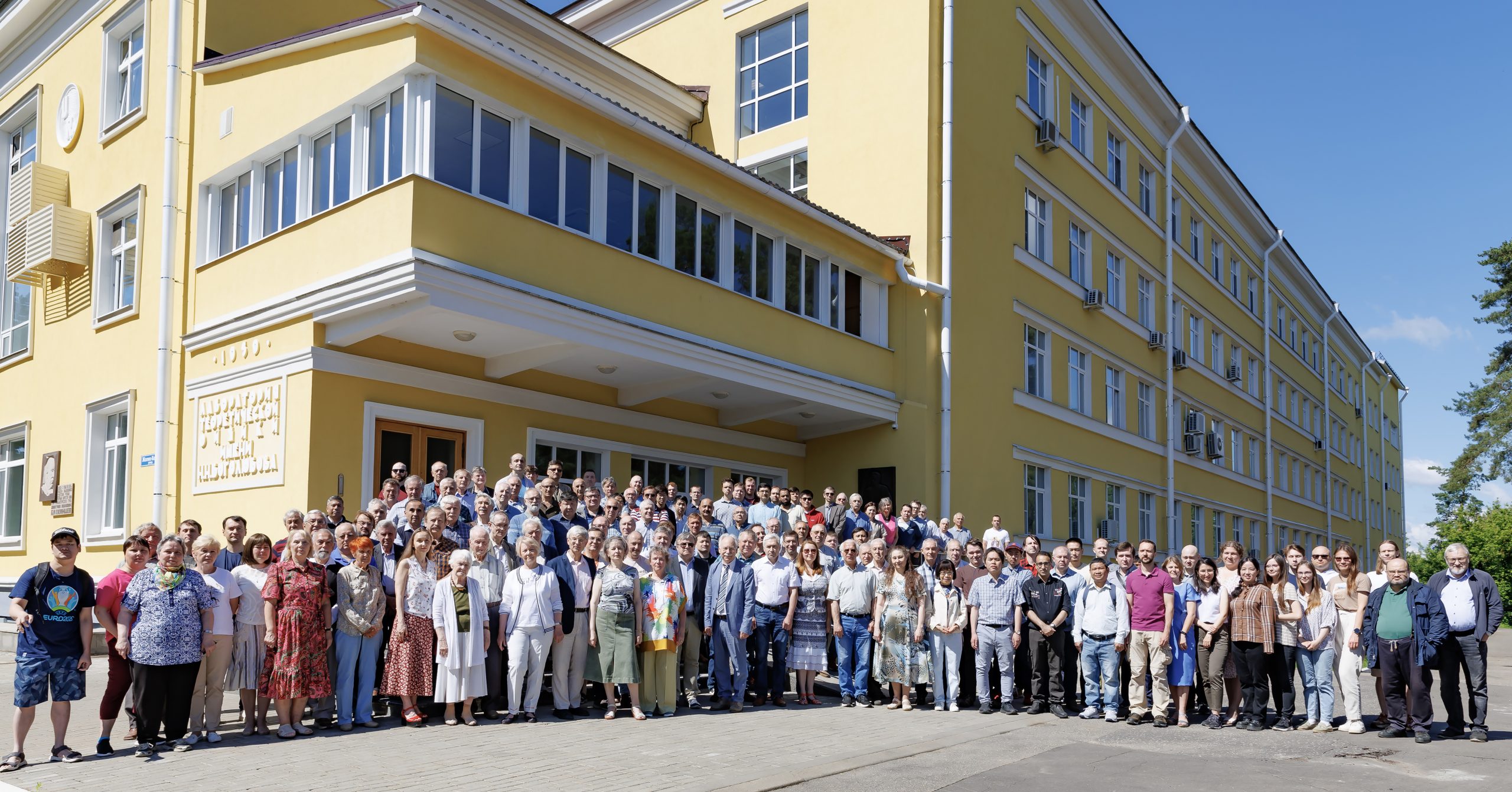
Research in theoretical physics at JINR is carried out by the Bogoliubov Laboratory of Theoretical Physics (BLTP) and teams of theoretical physicists in the experimental laboratories. As one of the largest centres, BLTP acts as a “generator” of interdisciplinary studies and international cooperation, thus determining the global scientific agenda of both theoretical and experimental research.
The research topics in theoretical physics are related to fundamental problems of modern physics and tasks defined by the JINR main facilities, primarily the NICA Project, and physics programmes of international collaborations (LHC, RHIC, FAIR, K2K, etc.). The Laboratory hosts the world’s leading experts in quantum field theory and particle physics, modern nuclear physics, conden- sed matter physics, and mathematical physics. Pioneering results of the studies of Dubna theoreticians have gained worldwide acknowledgement.
Research areas:
- Theory of Fundamental Interactions
- Theory of Atomic Nucleus
- Condensed Matter Theory
- Modern Mathematical Physics
BLTP contribution:
- 1/3 of JINR publications
- >500 scientific papers published per year
- 230 scientists
- ~15 annual scientific conferences, meetings, and schools
Information technology and high-performance computing
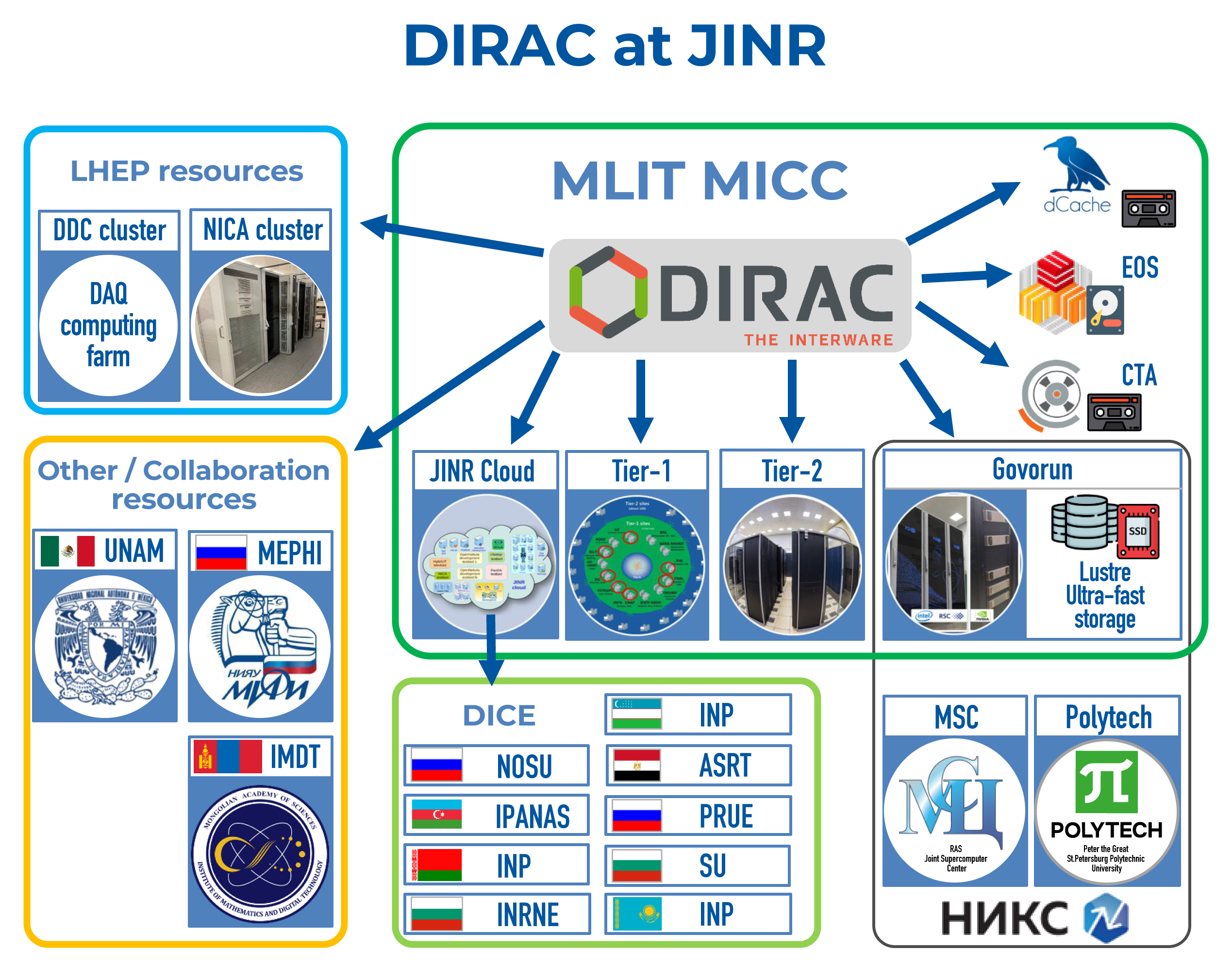
Key project — Multifunctional Information and Computing Complex (MICC).
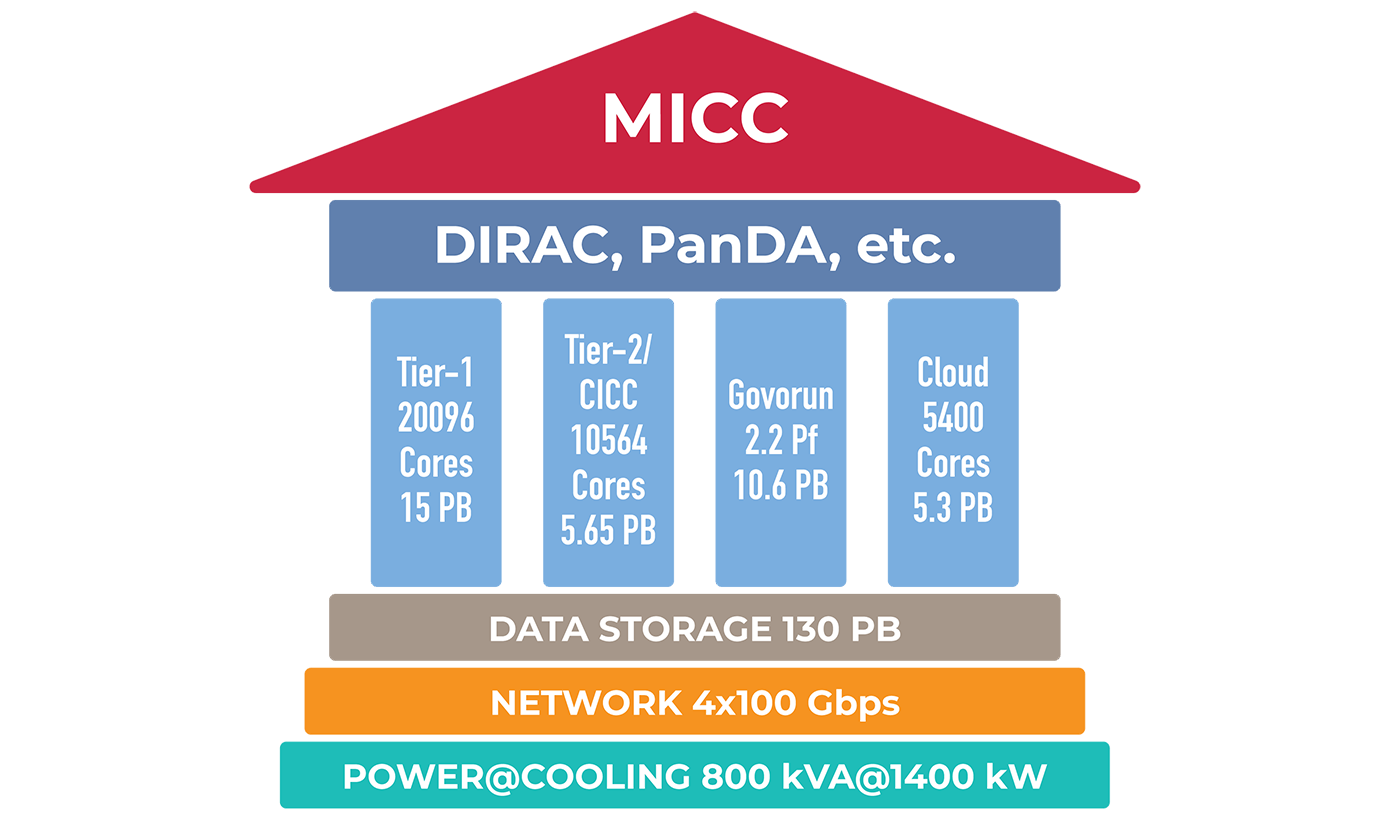
Distributed computing and data storage systems based on grid technologies and cloud computing, hyperconverged high- performance computing infrastructure with liquid cooling for supercomputer applications.
Research areas:
- Development of IT technologies and mathematical methods for processing, storing, and analysing data
- Big data
- Quantum computing
- Machine and deep learning
Telecommunication channels:
- JINR–Moscow 4×100 Gbit/s
- JINR–CERN (100 Gbit/s) and JINR–Amsterdam (100 Gbit/s)
- Local area network 2×100 Gbit/s
- Distributed multisite cluster network between MLIT and VBLHEP 4×100 Gbit/s
JINR grid infrastructure
- Tier–1 for CMS @ LHC and experiments at NICA
- Тier–2 for ALICE, ATLAS, CMS, LHCb, BM@N, MPD, SPD, NOvA, ILC, etc.
JINR cloud infrastructure
- Baikal–GVD, JUNO, and NOvA Neutrino Experiments
- Included in DICE — Distributed Information and Computing Environment (JINR & Member States)
HybriLIT Platform consists of the Govorun Supercomputer and the HybriLIT Education and Testing Site.
Govorun Supercomputer
- Hyperconverged software-defined system
- Total Peak Performance: 2.2 PFLOPS for DP
- Storage performance > 300 GB/s
Govorun Supercomputer key projects
- NICA Megaproject
- Calculations of the lattice quantum chromodynamics
- Radiation biology research
- Calculations of radiation safety of JINR facilities
- The Govorun Supercomputer is included in the unified supercomputer infrastructure based on the National Research Computer Network of Russia (NIKS)
A heterogeneous computing environment, based on the DIRAC Platform, was created for data processing and storage.